
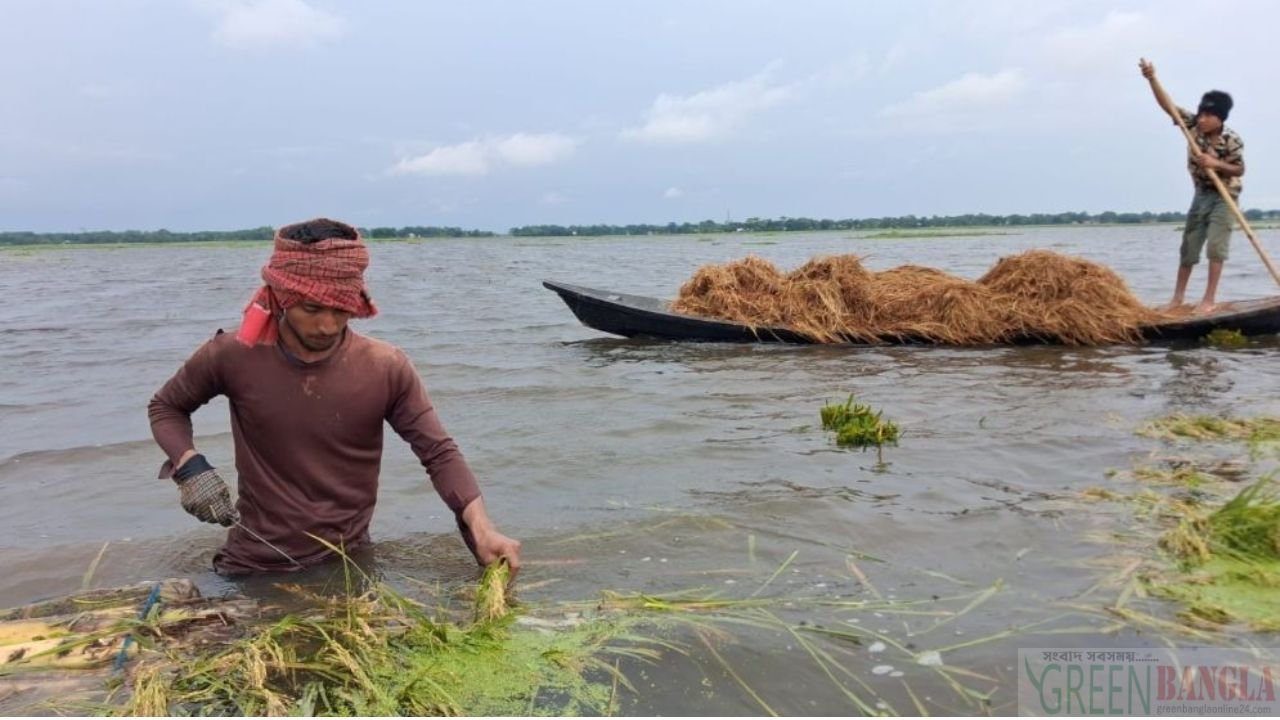
Silent cry of haor farmers, golden crops are drowning
Bangladesh is an agricultural country. Rice is the staple food of 95 percent of the people. A large part of this food comes from the haor region. Farmers have to struggle with nature every year to grow crops. Farmers grow crops with hard work day and night and deep love for their children. When the rice turns golden, the farmers forget all their troubles and smile with hope. They dream of selling this crop and building a toilet (raw toilet) for their homes, and replacing the broken tin, from which water leaks and wets the bed in the rain. They also think that they will give the money saved from the fertilizer shop so that they do not have to go to the market to hear about fertilizer. And if the price of rice is good, then they will borrow some money and build a tube well. So that their wives and daughters do not have to go to the chief’s house for water every day and do not have to see the faces of the villagers.
In the context of Bangladesh, these thoughts of farmers are like dreams worth lakhs of rupees woven on torn cloth. These random thoughts are like crimes. All these dreams of farmers are ended by the terrible waterlogging and floods. Due to excessive rain at the beginning of the season, the crops have been submerged in some places. In some places, some paddy has been harvested, but it has been spoiled because it has not been exposed to the sun. The most damage has been done in the haor areas.
Since the harvested paddy is wet, it sprouts (seedlings emerge). This makes the paddy unsellable in the market. As a result, farmers are forced to sell paddy at a nominal price. In many cases, it does not even cover the cost of production. In the haor areas where paddy has been submerged, including Ara Sunamganj-Kishoreganj, the amount of damage is immense. Standing in the water, Madan of Netrokona, Saikul’s elderly mother, was watching her sons harvest the submerged paddy. One son’s wife has to be caesared – there is no money. There is no way to repay the moneylender’s loan. Her throat caught as she spoke this. He said, ‘I don’t have much rice to eat, I’m buying rice from the canteen.’
A farmer from Haluargaon area of Sunamganj Sadar Upazila, Anwar Hossain, said, ‘Everything has gone down the drain. I haven’t received anything. I used to borrow to buy fertilizers, seeds, pesticides. How will I repay them, what else will I do?’ This is the picture of the people of the haor. The crops are being destroyed before our eyes, they are unable to do anything. How will they eat all year round? The disappointment of the state is evident on their faces as they think about how they will repay the loans taken to grow the crops. Heartbreaking tears.
Water accumulates in the haor for six months. The rest of the time, the farmers are busy growing crops. There are two types of interest business in the haor. One type of business is that marginal farmers or fishermen borrow money from moneylenders on interest for crops and fishing boats. The other type of business is agricultural loans taken from banks. This time too, many farmers went out to grow their dream crops with interest money. Their dreams have vanished before our eyes. How will they survive now, burdened with debt and food shortages? How will they educate their children? How will they meet their own survival needs?
The voice of Jasim Uddan, a farmer from Ashtagram in Kishoreganj, echoed the devastation unfolding before their eyes. ‘Thousands of acres of land are now under water. The paddy was turning red. The colour was like orange. I saw water in the afternoon after returning from work in the morning.’ I didn’t even have time to cut it. The next day, everything was submerged.