Energy crisis: Opposition leader and Home Minister debate in Parliament
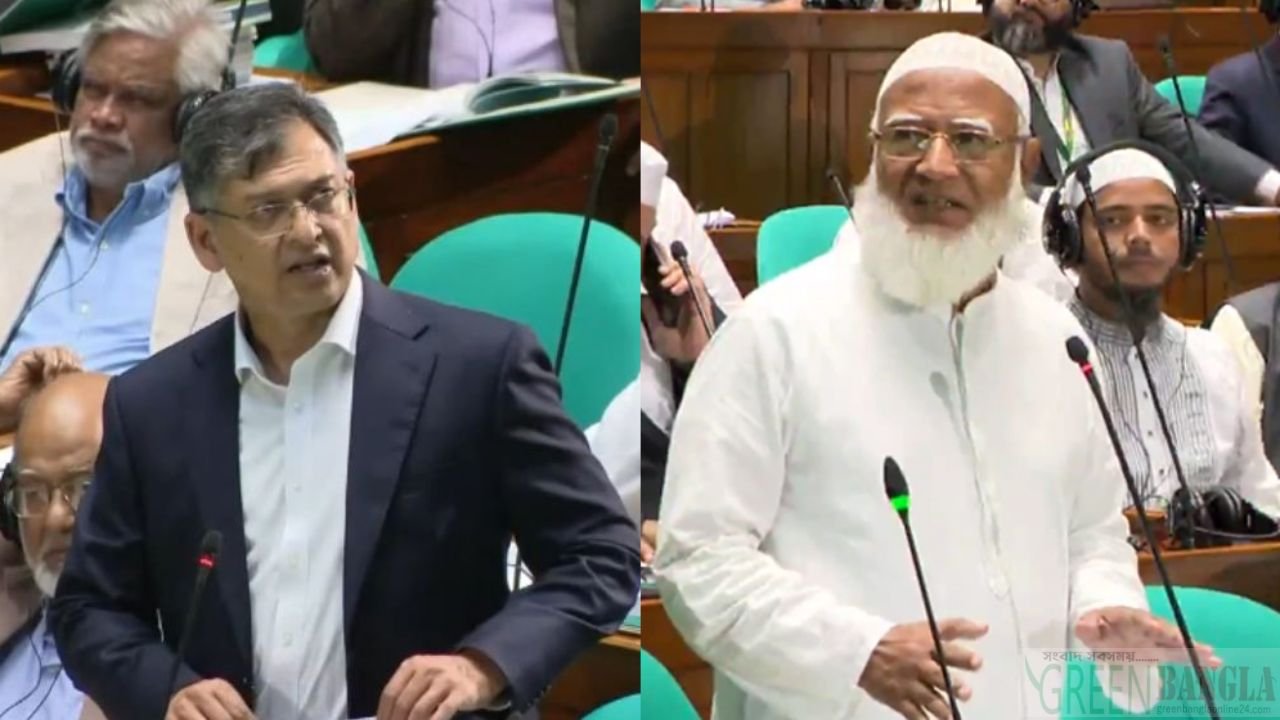
A heated debate has erupted in the National Assembly over the energy crisis between Opposition Leader Shafiqur Rahman and Home Minister Salahuddin Ahmed. Despite disagreements over the rules under which the issue will be discussed, the government and the opposition have finally reached an agreement. It has been decided to discuss the issue for one hour over the next three days without suspending regular proceedings.
At one stage of the extra-time debate in Parliament on Monday (April 20), the Home Minister raised the issue of a statement made by the Energy Minister on March 30 and said that there is no crisis of fuel oil and gas in the country, which has been shown by statistics.
On the other hand, Opposition Leader Shafiqur Rahman said, “The statement made by the Energy Minister in Parliament under Rule 300 did not match the reality.” He also said, “There is no crisis—in fact, there is no crisis inside Parliament. But there is a crisis outside Parliament.” The debate originally started with the opposition leader’s notice of the adjournment motion. The motion was made to discuss the energy crisis and the problems created in public life due to its impact. Nurul Islam of Chapainawabganj-3 constituency also made a similar motion.
However, Deputy Speaker Kaiser Kamal did not accept both the motions and said, “The matter has already been discussed in Parliament under various rules. The concerned minister has given a statement under Rule 300. If we still want to discuss it, then we will have to bring a notice under the appropriate rules.” Expressing anger at this, the opposition leader said, “What will we assume if this opportunity is not given? We will assume that we have not been able to discuss the most burning issue of public life in this Parliament. Won’t it be unfortunate for us?”
He further questioned, “What will happen to that statement? What problem will be solved in this statement? On the one hand, it is being said that there is no oil crisis. On the other hand, what is happening in reality is completely different.” Questioning why the opposition parties would remain in parliament if the notice was not taken into account, the opposition leader said, “There is no point in being in parliament if the people’s needs are not met. Every second of parliament is being spent on people’s money.” He requested that his notice be listed for discussion in a day or two. In response, Home Minister Salahuddin Ahmed said, “The opposition leader’s proposal is definitely worthy of discussion. It is also an urgent and important matter of national life.” There is an opportunity to discuss the issue in another way without adjourning the session.” He said, in the history of parliamentary politics in Bangladesh, two to four adjournment motions have been discussed, if not more. In the first session of the current parliament, two adjournment motions were discussed. This is a unique example in history. If another adjournment motion is given the opportunity to discuss, then efforts will be made to follow it in the future. He was in favor of giving notice under Rule 71 of the Rules of Procedure of the National Parliament or giving an opportunity for discussion under Rule 68. Referring to the statement of the Energy Minister, the Home Minister said, “After the Minister made a statement under Rule 300 and after making a long statement, it has become clear to the nation… There is no crisis of fuel oil and gas in our country. We have shown it with statistics.” The Minister has shown it.” Stating that the price of fuel oil has been increased to a tolerable level, Salahuddin Ahmed said, the government was forced to increase the price of oil to restore order or stop smuggling.
In response, Shafiqur Rahman said that the Home Minister has said very nicely that there is no crisis. But the crisis is outside the parliament. He gave an example, saying that due to the crisis, virtual courts are being held in sensitive places like the High Court for two days to save energy. He added, “This crisis is not created by the government, it is a global problem—we understand that.” But if the government party is fulfilling all the responsibilities, then where is the role of the opposition party?” The Deputy Speaker later said, “The parliament can be discussed for one to one and a half hours instead of half an hour without suspending the proceedings.” Agreeing to this, the opposition leader said that they would give notice, but they wanted the discussion in the presence of the parliament leader. Finally, the Speaker said, “If the opposition leader gives notice, effective action will be taken. Whatever needs to be done for meaningful discussions, the parliament will do it.”