
Israeli forces restrict fuel, flour imports into Gaza
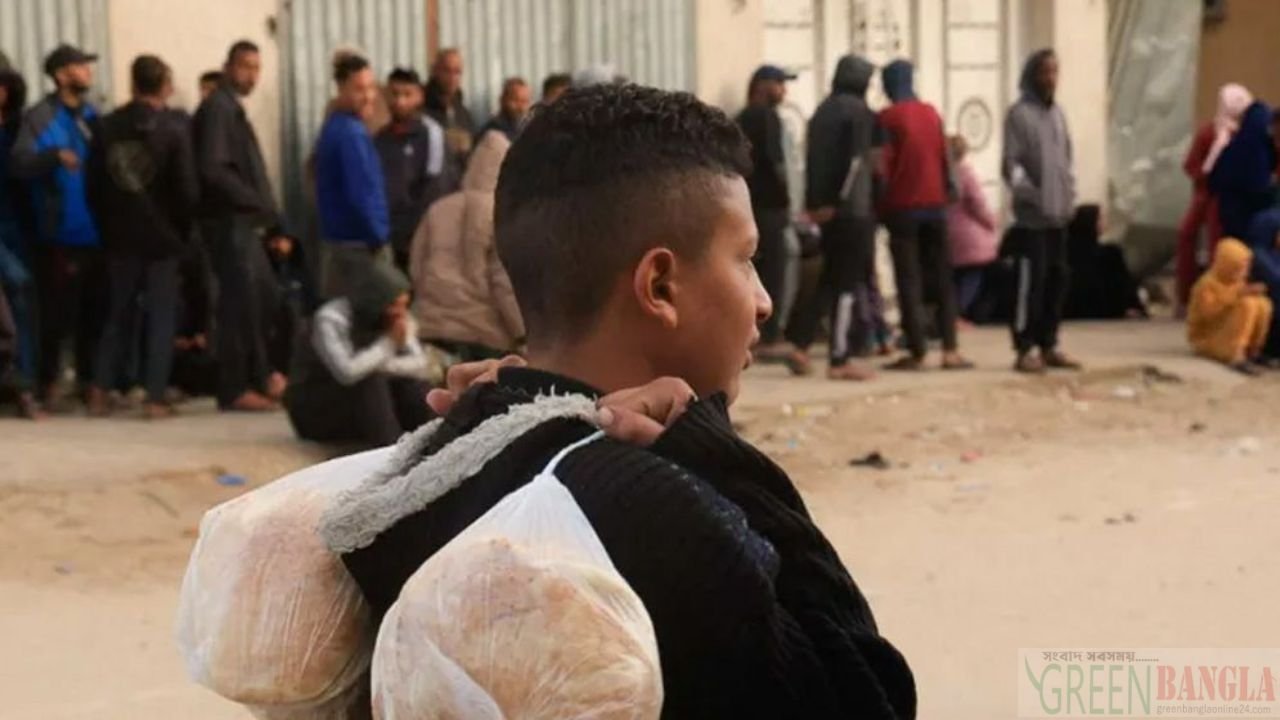
The Israeli Defense Forces have imposed a ban on the import of bread flour and fuel into Gaza, increasing the suffering of people trying to procure bread. Standing in a long line in the sun, 14-year-old Gaza resident Muhammad al-Rubi waited in the hope of buying a loaf of bread. But many like him are worried; even if they are patient, they may have to return empty-handed.
The flour and fuel shortages in Gaza have worsened in recent weeks. Due to the Israeli import ban, bakeries are unable to produce bread as needed. As a result, many Palestinians displaced by the war are forced to queue for hours in front of the limited number of bakeries to obtain ‘subsidized’ bread.
“My uncle’s family and our family live in the same house. We share our food. So we need a lot of bread every day,” said Muhammad al-Rubi. He said he and his cousin stood in separate lines to increase their chances. Sometimes we would return empty-handed because the bread would run out and the crowds would be too much.
Now, long lines can be seen at the remaining bakeries every day. The price of bread has risen as production has dropped and demand has increased, and syndicates are forming. The Gaza government’s media office said that an average of 450 tons of flour is needed daily, but only 200 tons are currently entering.
According to analysts, the crisis began on February 28, when Israel closed the entry points into Gaza. Although a limited number of crossings have since been opened, the flow of goods remains tightly controlled. More than a third of Gaza’s population relies on bakeries run by the World Food Programme (WFP). They sell bread packets at a fixed price, while some are distributed for free.
But the shortage of flour has also meant that the WFP is unable to provide the same assistance as before. As a result, many families are now facing a new crisis in obtaining bread. Maisar Abu Rekab, 72, said they used to get bread regularly, but now it is almost impossible to get it after standing in long lines. The situation has become even more difficult because no one in the family can physically stand there. “There is no family in Gaza that does not depend on bread. Bread is now the main support due to the lack of other food.” Currently, the price of a packet of bread has reached 10 to 15 shekels, while the average daily requirement for a family is two packets. This is putting additional financial pressure on low-income people.