
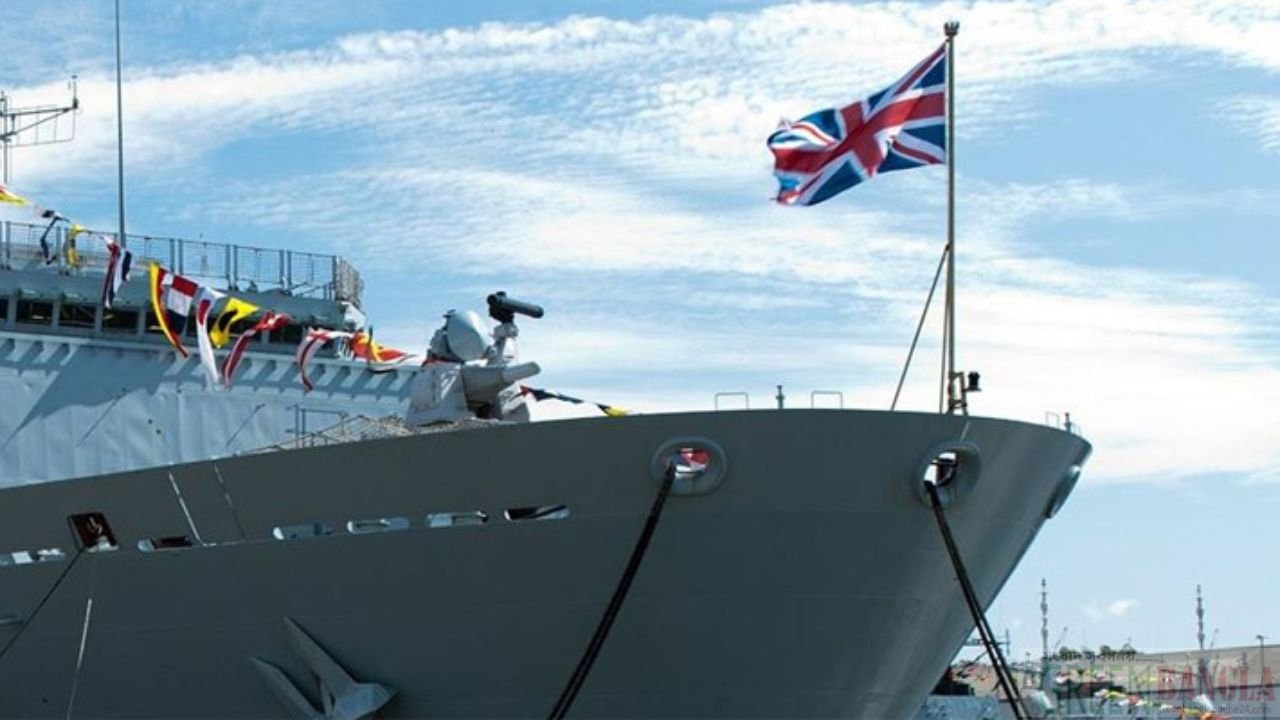
US threatens to blockade Iranian ports, Britain will not join
The US military has threatened to blockade all Iranian ports from Monday night (April 13). The UK has said that it will not join the US plan. That is, the UK will not participate in the US-led military blockade of Iranian ports around the Strait of Hormuz.
The ban on ships entering and leaving Iranian ports will begin today, Bangladesh time. This step is being taken to increase pressure on Tehran after no agreement was reached despite long talks in Pakistan. According to the BBC, British naval ships and troops will not be used to blockade Iranian ports.
However, British mine clearance ships and anti-drone systems will continue their operations in the region. A British government spokesman said, “We support freedom of navigation and the reopening of the Strait of Hormuz, which is essential for the global economy and our country’s cost of living.”
The US Central Command (CENTCOM) announced yesterday evening that all ships entering and leaving Iranian ports will be subject to the blockade starting at 10am (Eastern Time) on April 13. This will include all types of ships in ports adjacent to the Persian Gulf and the Gulf of Oman.
However, CENTCOM said that it will not block ships traveling through the Strait of Hormuz to other ports. This indicates that Washington has somewhat backed down from its previous threat to block the entire strait. Meanwhile, Iranian authorities have rejected the US blockade plan. The country’s parliament speaker Mohammad Bagher Ghalibof said that Iran will “not give in” to the threat.
Responding to the US blockade announcement, Ghalibof wrote in a post on Exy (formerly Twitter), “Enjoy the current fuel prices. Because of your so-called blockade, you will soon have a shortage of four or five dollars of gasoline.”
The post indicates that oil prices are set to rise further. Since the US and Israel launched a war against Iran on February 28, Tehran has effectively established control over the Strait of Hormuz. About a fifth of the world’s oil and liquefied natural gas passes through the route, which has now come to a near standstill.
Iran has kept its own shipping lines open and is allowing some foreign ships to pass through on a limited basis. The country is also considering introducing a toll system after the war.
In response to Trump’s threat of sanctions, Iran’s Islamic Revolutionary Guard Corps (IRGC) said that any entry of military ships would be considered a violation of the ceasefire and would be met with harsh measures. The announcement of the sanctions is seen as a direct result of the failure of talks in Islamabad, which has increased the risk of a new conflict.


