
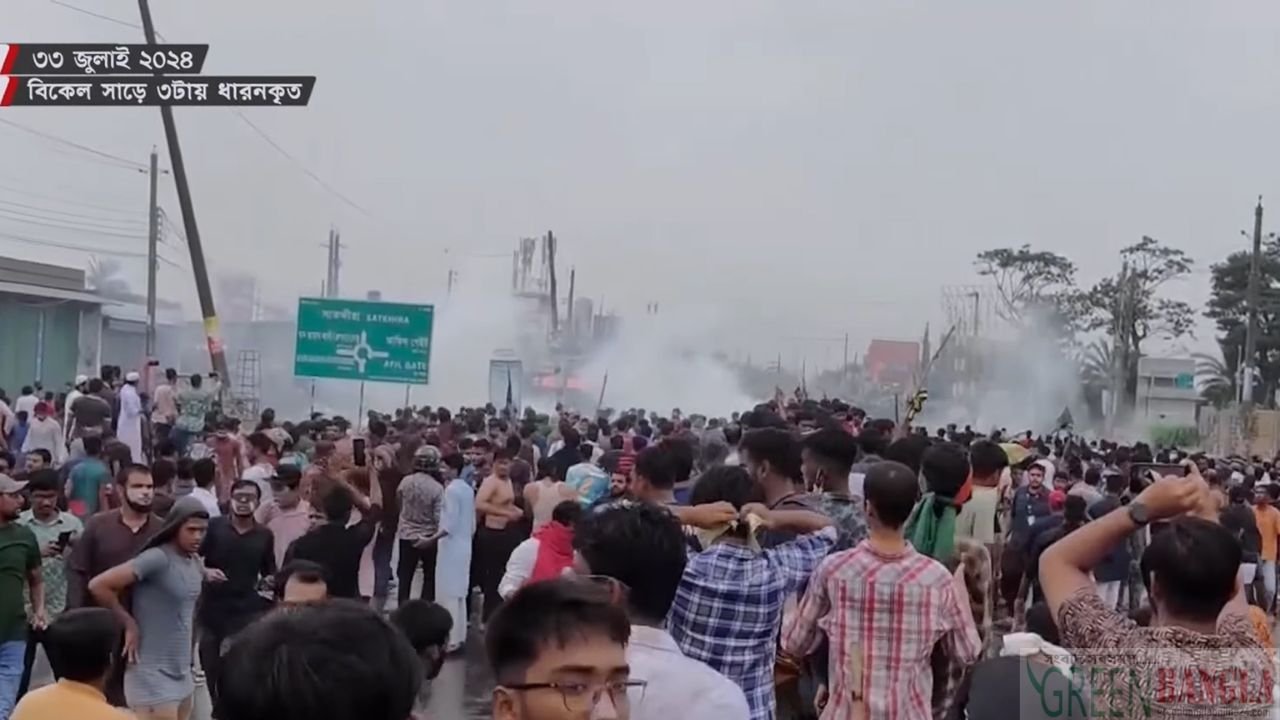
On that day, ‘July 33’, the movement to overthrow the government spread over 56,000 square miles
July 24 was still ongoing. July 33 was underway in Bangladesh, surpassing August. The entire country was ablaze with the fire of treachery. The language of protest had spread in songs, poems, and graffiti. The fire of public anger was burning in the nooks and crannies of the city as well as the countryside. The rain and the weekend did not seem to have stopped this march. Despite being soaked to the skin, the protest was clear on every face. There were students, teachers, doctors, lawyers, guardians, poets, writers, and artists in the procession. Ignoring the heavy rain, doctors held a rally at the Central Shaheed Minar demanding justice for the deaths of students. Poets and writers from all walks of life held a rally at Bangla Motor. And in front of the National Press Club, cultural organizations including Udichi participated in the treachery march to protest the killing of students during the quota reform movement. The march was for nine points, including justice for those killed in violence and an end to mass arrests. From the National Press Club to the Shaheed Minar – this march of millions of people brought a new dimension to the uprising. Which later came to fruition in one go. From that day on, the demand for the fall of the government spread to 56,000 square miles. On that day too, Awami League leaders and activists and students were killed in police firing. Meanwhile, a national daily reported that about 78 percent of the people killed in the clashes centered on the quota reform movement had fatal bullet wounds on their bodies. It was said that most of them were shot in the head, chest, back and stomach. Prothom Alo received information that 212 people had been killed in the clashes until July 33. An analysis of the deaths of 175 of them showed that 137 had fatal bullet wounds on their bodies and 22 had shrapnel wounds on their bodies. Among the others, 10 had signs of beating and injury. Four people died in fires set on cars and establishments. Two drowned in the water while being chased by the police. Then, the Anti-Discrimination Student Movement announced a nationwide movement and non-cooperation movement from August 4. On that day, Facebook was again blocked for seven hours. The six coordinators said that they were pressured to give a statement withdrawing their movement at the DB office. Sarjis Alam, one of the coordinators during the movement and the current chief organizer of the National Citizens Party, said, “When we six coordinators were in the custody of the intelligence police, a mandatory statement was read out. At that time, we thought, we will get out of here and then we will have to organize again and take to the streets.” Sheikh Hasina called on the protesters to sit in for discussions today and said that the doors of Ganabhaban are open for discussions.


