
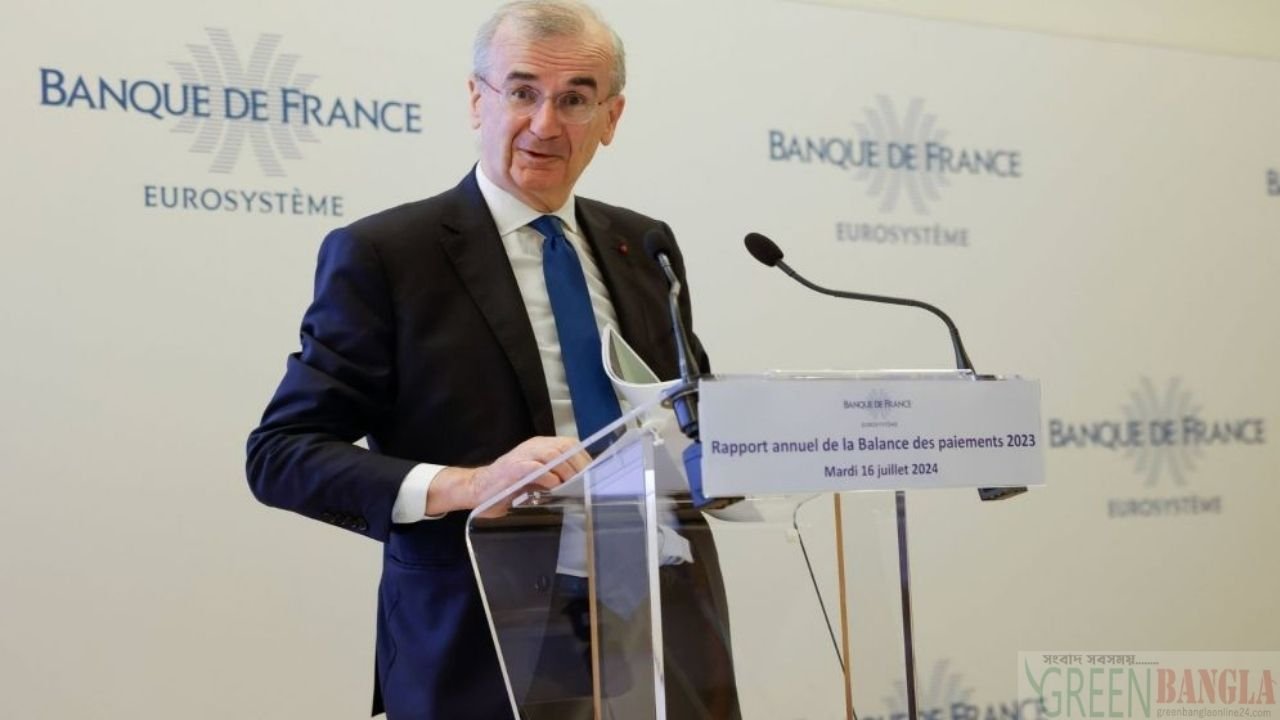
France’s economy is in grave crisis
The French economy is slowly moving towards a serious crisis. The country’s central bank, the Bank of France, has warned that France will enter an economically risky zone if the budget deficit exceeds five percent of gross domestic product (GDP). This warning was given by the Governor of the Bank of France, François Villeroy de Gallo.
He made the comments in an interview with the influential French television channel BFMTV on Wednesday (January 14). At the same time, he described the current financial situation in France as worrying as a member of the European Central Bank’s policy-making council.
Villeroy de Gallo said that if the budget deficit exceeds five percent in 2026, it would create a dangerous situation for France. This could damage the country’s credibility in international markets and risk a significant increase in interest rates on government debt.
He also said that uncontrolled government spending, weak economic growth and a growing debt burden have put the French economy under severe pressure. If this situation continues for a long time, it will be difficult to maintain government spending on social security, health, education and infrastructure.
While member states are currently obliged to keep their budget deficits under 3 percent of GDP under European Union rules, France has long exceeded this limit. In recent years, inflation, rising spending on pensions and social benefits, and slowing economic growth have added to the pressure on the budget deficit.
According to economists, the French government may have to make tough and unpopular decisions to deal with the crisis. It will be difficult to reduce the budget deficit without controlling government spending, reforming the tax system and taking steps to increase productivity.
Experts have warned that if France fails to deal with the crisis in a timely manner, the impact will not only be limited to the country’s domestic economy; the financial stability of the entire eurozone could also be threatened.


