
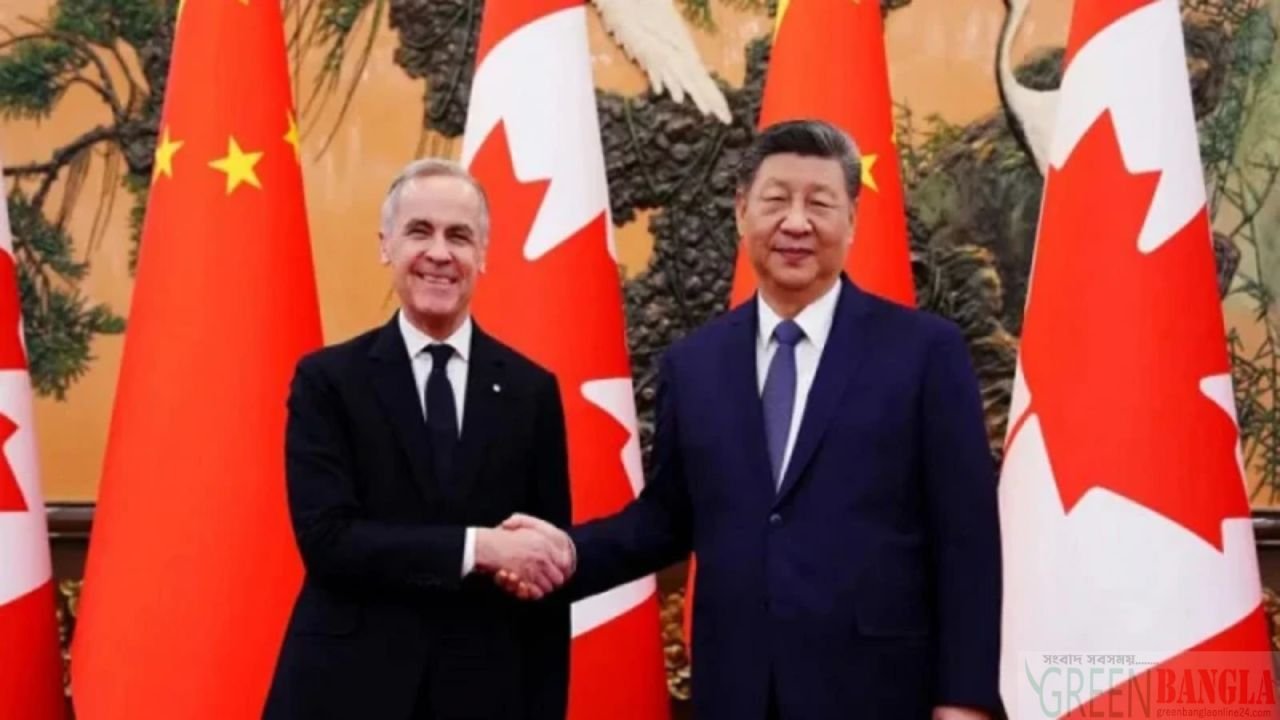
Canada sends strong message to Trump by joining hands with China
Canada has sent a strong message to the ruling Trump administration of the United States through a new trade deal with China. The British media outlet BBC reported this information in a report on Saturday (January 17). According to the British media outlet BBC, the country’s Prime Minister Mark Carney has announced a reduction in tariffs on Chinese electric vehicles, which indicates a redefinition of Beijing-centric strategy amid ongoing trade uncertainty with Washington.
According to the report, after signing a new trade deal with China, Canadian Prime Minister Mark Carney said last Friday that “the world has changed. This deal will put Canada in a good position in the new world order.”
Later, in a post on social media, he said that the relationship with Beijing is strategic, pragmatic. It is being strongly rebuilt. According to him, the relationship with China has now become more relevant than Washington under the Donald Trump administration.
Under the new deal, Canada will reduce tariffs on Chinese electric vehicles. In return, China will reduce retaliatory tariffs on Canadian agricultural products. Beijing has also promised to ease visa restrictions for Canadian citizens. At the same time, Ottawa hopes that Chinese investment in Canada’s auto industry will increase.
However, the decision has met with mixed reactions within Canada. Ontario Premier Doug Ford criticized the deal, saying that “it could hurt domestic manufacturing and put jobs at risk.” Saskatchewan Premier Scott Moe said that “canola farmers will benefit from China’s tariff reductions.”
According to experts, the tariff reductions will allow Chinese brands to capture about 10 percent of Canada’s electric vehicle market. This will increase competition with US-based manufacturers such as Tesla. The White House’s reaction to the new agreement between Canada and China is also divided. US Trade Representative Jamieson Greer called the deal “problematic,” but Trump saw it as positive.
The deal will reduce Canada’s tariffs on Chinese electric vehicles from 100 percent to 6.1 percent, with a quota of 49,000 vehicles per year. The quota could be increased in the future. In return, China will reduce tariffs on Canadian canola and remove tariffs on other agricultural products, including seafood.
Analysts say the move reflects growing uncertainty about the North American trade structure. The Trump administration has already imposed new tariffs on Canadian industry and threatened to undermine the USMCA trade agreement between the United States, Mexico and Canada. Ottawa officials say diversifying trading partners is now essential to maintaining economic stability.


