
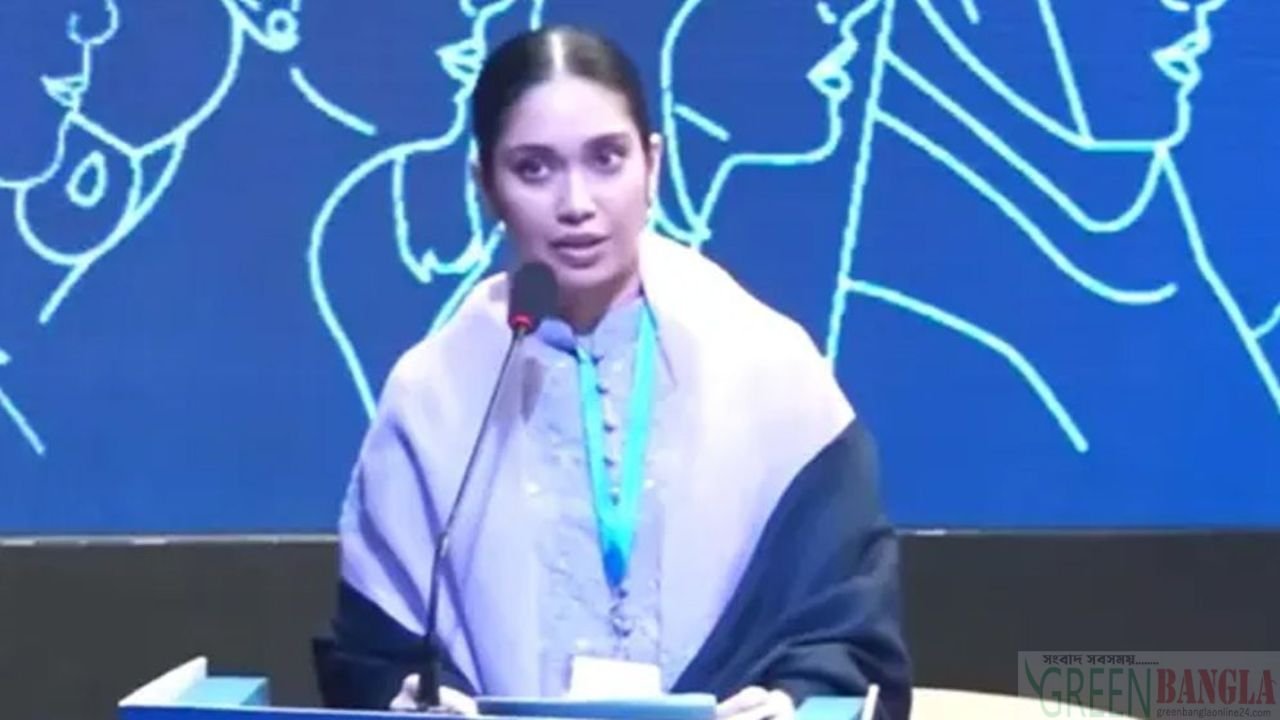
Call for all to work together to build the future of women – Jayma Rahman
Jayma Rahman, daughter of BNP Chairman Tarique Rahman, has called for all to work together to build the future of women and see national progress. She said this at a workshop titled ‘Women’s Policy, Potential and Future of Bangladesh in Nation Building’ at the Krishibid Institute in the capital on Sunday (January 18).
“Today I stand here with a different feeling and emotion. This is my first speech at this policy level in Bangladesh. I am not someone who has all the answers or knows the solutions to all the problems. Still, I believe that all of us should have the sincerity to do something for the society and the country even from our own small places. Today I have come to move forward with the attitude of just listening, learning and working together.”
“I first learned about the role of women in society from my family. Long before we come into contact with any policy, law or institution, our home becomes our first school. These places teach us what is possible, what is acceptable and what is expected of us,” she said. This time, she also highlighted the role of grandfather Ziaur Rahman and grandmother Khaleda Zia in women’s education and advancement.
Stating that life in Bangladesh and the UK has taught her something important, she said that policies and opportunities alone do not create equality. If social norms, daily expectations and mindsets remain unequal even after expanding education, passing laws, setting national goals, then empowerment will always be shaky.
She added that women in Bangladesh still spend far more time than men on household chores every day. This labor is equivalent to 19 percent of our GDP, but it remains largely invisible in economic planning and national decision-making. This makes one thing very clear: gender equality is not just a problem for women, it is an economic and national problem. Despite significant progress in girls’ education, the labor force participation rate for women in Bangladesh is below 40 percent, while for men it is over 80 percent. Women are much more likely to withdraw from paid work after marriage or having children; Not because of a lack of skills or ambition, but because our system assumes that they will make these sacrifices.
To men, she said, “Your support for women’s rights is crucial. Your role in celebrating women’s achievements is important, but equality cannot be sustained through words alone. If systems and expectations are built on women’s sacrifices, then inequality will persist.”
She added that when women are welcomed and not marginalized, they not only transform their own lives, they transform the future of their families and the nation. If Bangladesh wants real progress—not just symbolic success stories, but sustainable national development—then empowerment cannot be confined to classrooms, offices or policies. It must reach into our homes, our institutions and our mindsets. It must be a collective effort by all of us to shape our future and see national progress.


