
Bangladesh’s World Cup boycott threatens India’s Olympic dreams
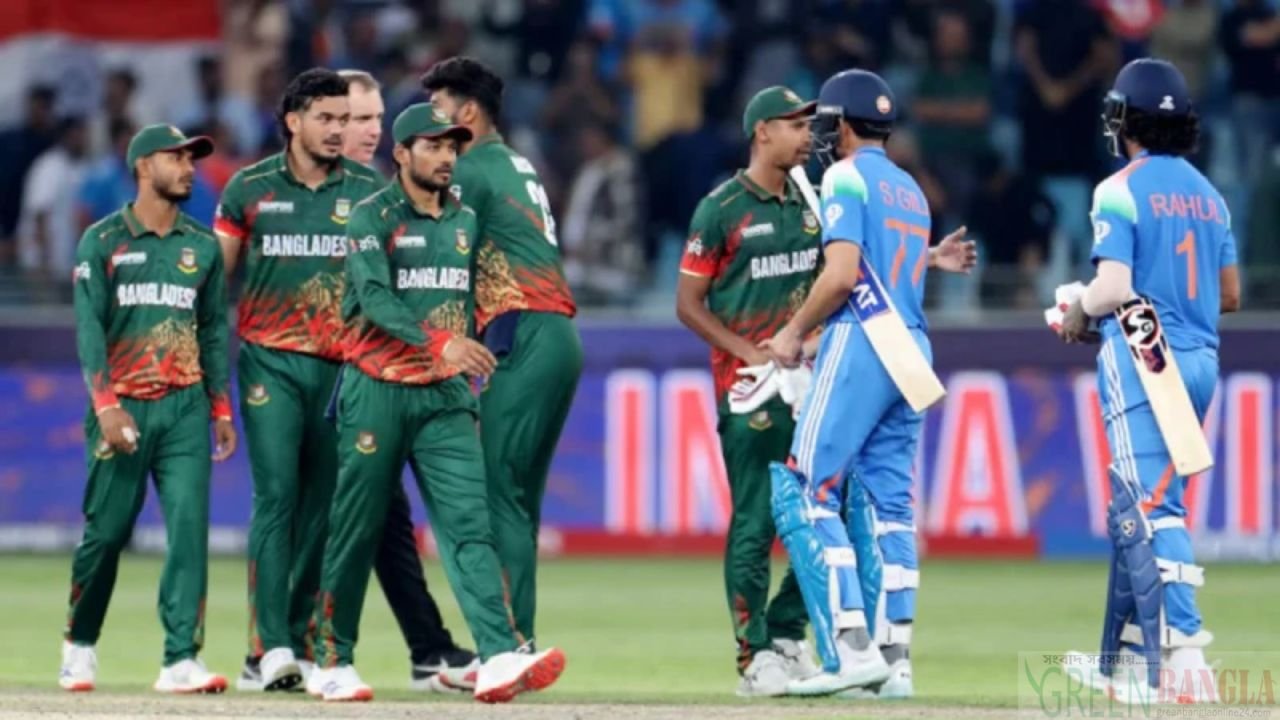
Bangladesh’s decision to pull out of the T20 World Cup could have a negative impact on India’s bid to host the 2036 Olympics. The International Olympic Committee (IOC) has expressed deep concern over political interference in sports. Bangladesh has pulled out of next month’s T20 World Cup. Earlier, the International Cricket Council (ICC) rejected their request to co-host their group stage matches in Sri Lanka instead of India. The situation stems from long-standing political tensions, which intensified after the Kolkata Knight Riders’ decision to drop Bangladesh pacer Mustafizur Rahman from their IPL squad.
Relations between the two countries have deteriorated significantly in the past month. Violent clashes have erupted in various parts of northern Bangladesh following the death of a Hindu man. In the incident, the Kolkata Knight Riders claimed that they took the decision on the instructions of the Board of Control for Cricket in India (BCCI). Meanwhile, Pakistan is also reportedly considering boycotting the T20 World Cup in solidarity with Bangladesh. A final decision on the matter is likely to come this week.
Although the ICC has officially stated that its decision was taken independently, the BCCI is believed to have lobbied heavily to force Bangladesh to play in India. The ICC has a history of favouritism towards the BCCI in the past. For example, India was guaranteed a semi-final in Guyana in the 2024 T20 World Cup for broadcasting and financial reasons.
The BCCI has a strong influence in the ICC and has close ties with the Indian government. Current ICC chairman Jay Shah was previously BCCI secretary and his father Amit Shah was home minister in Prime Minister Narendra Modi’s government. ICC CEO Sanjog Gupta previously held a top position at Geostar Media Group, which owns the exclusive broadcast rights to ICC events in India.
The political deadlock has come at a very bad time for India. India was awarded the 2030 Commonwealth Games in Delhi last month. The country is also bidding to host the 2036 Olympics in Ahmedabad, where Qatar is seen as a major rival. However, the IOC is much stricter than the ICC on political interference. According to an IOC source, it is “unthinkable” for India to host the Olympics if there is a risk of boycott by other countries for political reasons.
According to the Olympic Charter, sports bodies must be run independently of political influence. Furthermore, according to Olympic rule 50.2, the expression of political or religious views during the Games is completely prohibited.
An example of the IOC’s “zero tolerance” policy was seen last October, when Indonesia was temporarily excluded from all discussions on hosting future Olympics. Because it refused to grant visas to the Israeli team at the World Artistic Gymnastics Championships in Jakarta. Indonesia was also in the running to host the 2036 Olympics, but was quickly eliminated.
International cricket politics could play a big role in the fight to host the 2036 Olympics. Cricket is returning to the Los Angeles Olympics after two years for the first time since 1900 and is also on the schedule for the 2032 Brisbane Olympics. Cricket was originally included in the Olympics to attract the Indian market, but the IOC is not willing to do so at any cost. It is worth noting that Pakistan’s matches in the T20 World Cup will be held in Sri Lanka in response to India’s refusal to play across the border. The two countries are not currently playing any bilateral series. IOC sources also said that if India is to be considered a credible Olympic host, it will have to show clear initiatives to improve relations with Pakistan and Bangladesh.


