We all want to live together, we want to save the country: Chief Whip
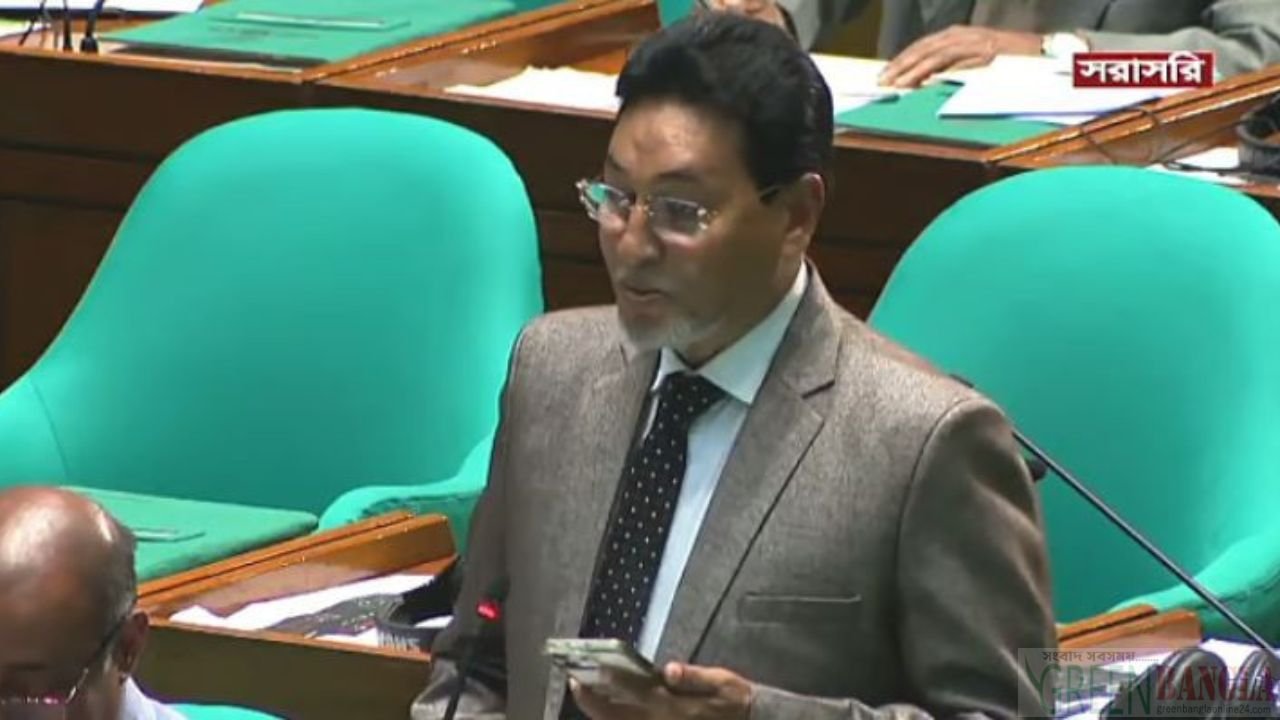
Calling for a coordinated role of all parties in protecting national unity, an effective parliament and democracy, Chief Whip of Parliament Md. Nurul Islam said, “We do not want anyone to die, we all want to live together – we want to save the country, then we want to live, the current Parliament must move forward with this philosophy.”
He said this while participating in the discussion on the motion of thanks on the President’s address under the chairmanship of Deputy Speaker Barrister Kaiser Kamal in the session today (April 30). Recalling the difficult times of the past, Chief Whip Nurul Islam said, “Many members of the current Parliament have come here with long experiences of political oppression, lawsuits and repression. This Parliament is the Parliament of the oppressed.”
He said, “Bangladesh has repeatedly moved forward through crises, instability and political divisions. The country has come to its current position after overcoming periods of famine, lack of democracy and dictatorship.” Highlighting the historical context, Nurul Islam said that before independence, the people’s dream was to build a democracy, a society without discrimination and a self-reliant Bangladesh. Although inspired by that dream under the leadership of Sheikh Mujibur Rahman, after independence, various repressions, atrocities by the Rakshi Bahini, famine and political crises plunged the country into despair.
He mentioned that the democratic framework was also limited by the establishment of Baksal. The Chief Whip said that later, under the leadership of Ziaur Rahman, he tried to turn the country around by restructuring the economy and introducing production-oriented policies. Although instability recurred after his death, the movement to restore democracy became stronger under the leadership of Khaleda Zia.
He said that Bangladesh has repeatedly gone through crises, dictatorships and dark times. In recent times, there has also been an experience of torture, disappearances, impunity and political repression. The Chief Whip said that after overcoming these ups and downs, there is a possibility of a ‘new sunrise’ again. In that context, he called on all parties to forget their differences and unite to build the future of the country.
He quoted BNP Chairman Tarique Rahman’s statement and said that despite party differences, everyone must unite to build a ‘fascism-free, independent, sovereign and humane Bangladesh’. At the same time, he praised the opposition party’s statement and said that lessons must be learned from the limitations of the past to form an effective parliament. Stating that it is important to make the parliament effective before making it vibrant, the Chief Whip said, ‘If the parliament is not effective, then just being vibrant is of no use.’ He called for finding reasonable solutions by raising national problems in the parliament.
The Chief Whip said that political vendetta and divisive politics should be avoided and consensus should be built in the national interest. For example, he said that the adoption of a united stand in Parliament on the issue of energy and gas has had a positive impact on the public mind. He said that the government and the members of Parliament have decided to work in the national interest by giving up personal benefits. ‘I will not take land, I will not take cars—this decision is not for personal gain, but for the interest of the nation,’ he said.
Referring to the recent activities of the Parliament, he said that a large number of laws and ordinances had to be worked on in a short period of time. He said, ‘We have worked on 133 ordinances, which is a record.’ However, he admitted that there were some limitations due to the pace and expressed regret to the opposition members. Stressing on strengthening the law-making process, he said that in future, bills will be presented after more thorough scrutiny.
In his speech, the Chief Whip stressed on improving the living standards of rural, working and low-income people. He said, “Politics should be for the people—the real goal of democracy is to improve the living standards of farmers, workers, and rickshaw pullers who struggle every day to survive.” He called on all parties to unite and advance democracy, saying, “We have to work together in the interest of the country, in the interest of the people.”