
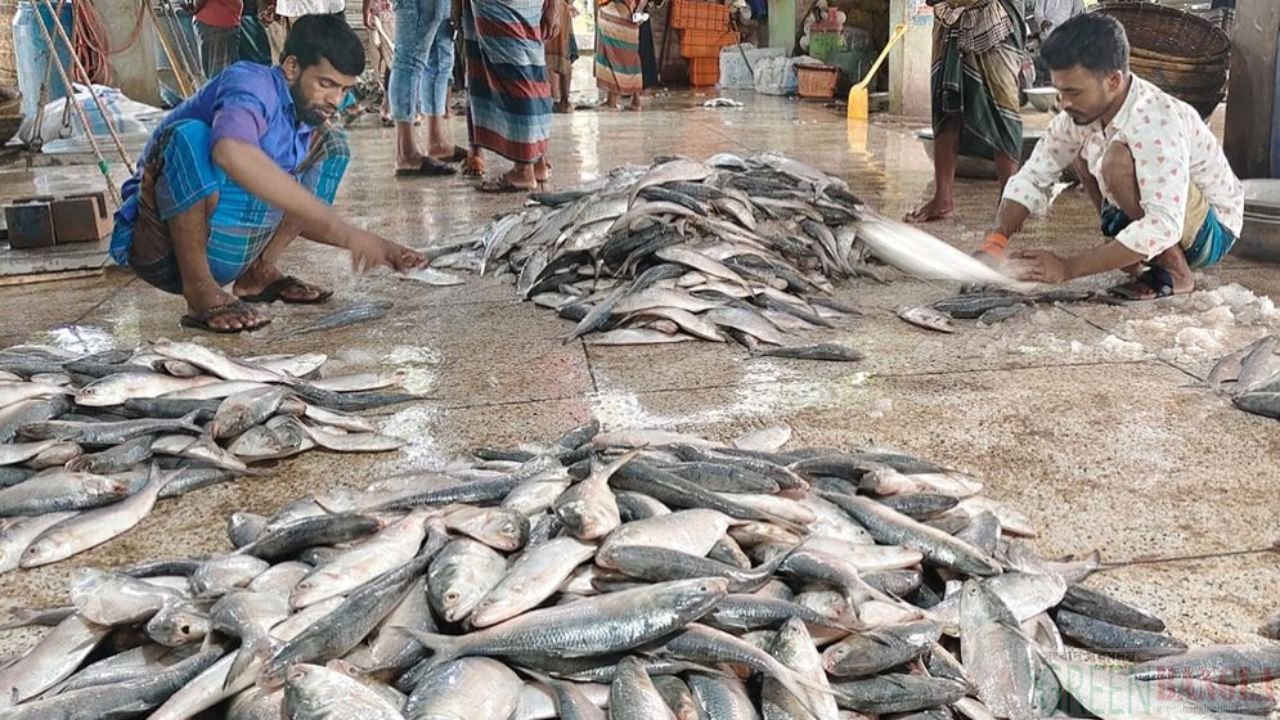
Skyrocketing prices of hilsa before Baishakh, crisis in the market
Before the first Baishakh, the prices of hilsa have increased abnormally in the wholesale fish markets of the tourist center Kuakata and the fishing port Alipur-Mohipur. Although small and medium-sized hilsa are limited in the market, large hilsa have become almost scarce.
It has been seen in the field that hilsa weighing 900 to 1100 grams is being sold for 1 lakh 10 thousand to 1 lakh 20 thousand taka per maund. The price of hilsa weighing 700 to 800 grams is 80 thousand to 90 thousand taka, hilsa weighing 400 to 600 grams is 60 thousand to 70 thousand taka and small jatka is being sold for 30 thousand to 35 thousand taka per maund.
This price increase in the wholesale market has also affected the retail market. Ordinary buyers are angry because hilsa is being sold at high prices in various markets of the district, including the city’s New Market. Fish shop owners said that fishermen are not able to catch enough fish due to the oil crisis. Along with this, the 58-day fishing ban starting from April 15 and the increase in demand around Boishakh have reduced the supply of hilsa in the market.
Md. Shah Alam Howlader, a seller at Bhai Bhai Arat in Mahipur, said, “There is not much hilsa available in the sea. Due to the oil crisis, many fishermen are unable to go to sea. The upcoming ban on it is putting pressure on us.” A. Rahim, a buyer who came to buy hilsa, said, “I am surprised to see the price of hilsa. It seems more expensive than gold. If you want it at a lower price, the sellers say that you will not even get hilsa scales at that price.”
Md. Fazlu Gazi, former president and upazila chairman of the Mahipur Matsya Arat Samabay Samity, said, “Less hilsa is being caught in the sea compared to the demand. There is also an oil crisis. Although there is demand during Boishakh, the supply in the market is low, so the price is high.” Upazila Senior Fisheries Officer Apu Saha said that the demand for hilsa increases every year on the occasion of Pahela Boishakh. But currently, due to low fish stocks and fuel shortages, the supply is not normal. That is why the price has increased.