‘Road accidents are a permanent curse for the nation’
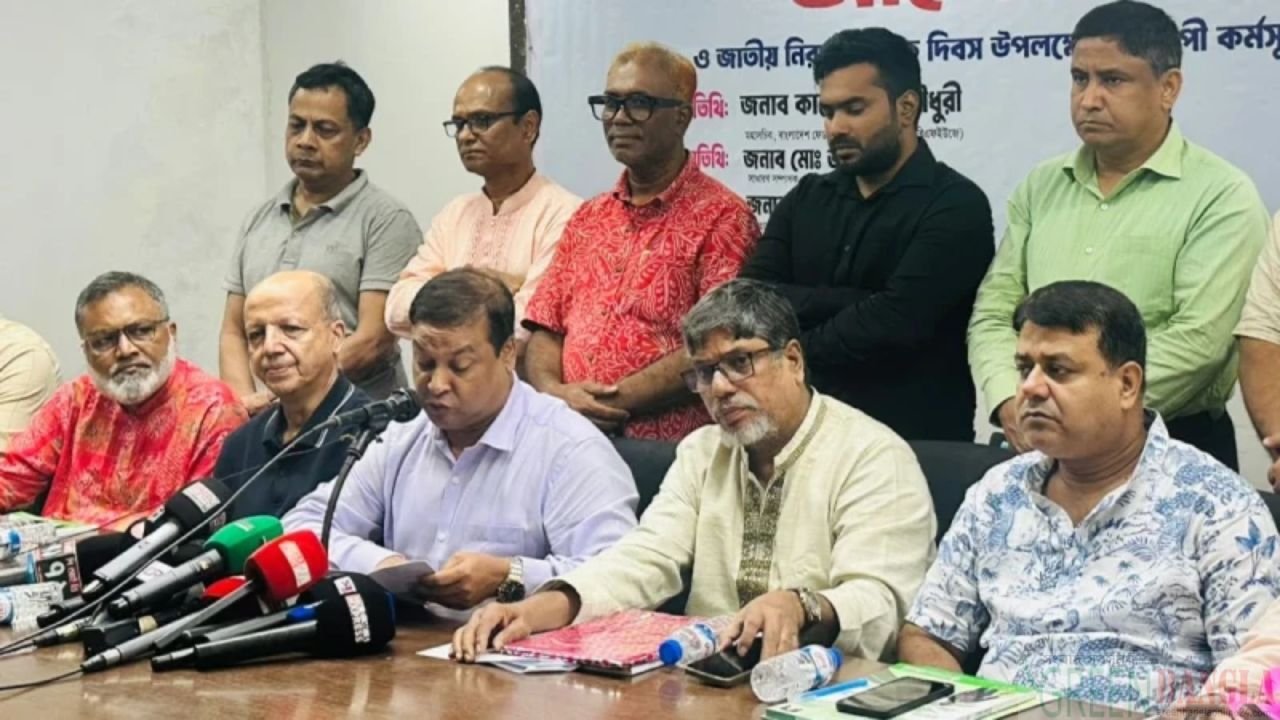
Bangladesh Federal Union of Journalists (BFUJ) Secretary General Quader Gani Chowdhury has said that road accidents have now become a permanent curse for the nation. He said, ‘Every day, if you open the pages of the newspaper, you will see that people are dying or being maimed in road accidents somewhere in the country. These tragic incidents are not only damaging the individual and family, but also the entire society and economy.’ He said these things while addressing the discussion titled ‘Goodwill of politicians of all parties is essential to restore order on the roads’ at the Jahur Hossain Chowdhury Auditorium of the National Press Club today (October 30) as the chief guest.
The event, chaired by Nischa founding member Liton Ershad, was also addressed by National Press Club General Secretary Ayub Bhuiyan, former DRU president Morsalin Nomani, senior journalist Shahabuddin Sikder, Nirapar Sarak Chai Acting Chairman (Virtually) Mirajul Moin Joy, Secretary General SM Azad Hossain, Organizing Secretary Abdur Rahman and member Mannan Firoz. Quader Gani Chowdhury said that according to BRTA data, 5,380 people lost their lives in road accidents in the country in 2024. However, according to private sources, this number is much higher. In September alone, 417 people were killed and 682 were injured in 446 accidents.
He said, “According to the World Safety Foundation report, the financial loss due to road accidents in 2024 will be about Tk 21,880 crore, which is about 1.5 percent of the country’s GDP.”
The BFUJ Secretary General said that there is a provision for government compensation for those killed or injured in road accidents. However, the common people do not apply due to lack of knowledge about this law. According to the law, the family of the deceased is supposed to get compensation of Tk 5 lakh, those who are physically injured are supposed to get Tk 3 lakh and those who are seriously injured are supposed to get a maximum of Tk 3 lakh.
He also said, “The application has to be made within 30 days of the accident – this is not possible for many. The bereaved family cannot take administrative action so quickly. Therefore, I will request the government to extend this period to 90 days.”
Quader Gani Chowdhury said, ‘Although the plying of battery-powered auto-rickshaws, Nasimon-Karimon and other unfit vehicles on our highways is illegal, yet it is happening in front of the police. Despite the High Court’s order in 2017, these vehicles are still plying on the roads. As a result, these vehicles suddenly coming out of the highway lanes are the main cause of accidents.’
He said, ‘BRTA says there are six lakh unfit vehicles in the country, but in reality the number is higher. During the festival, old, worn-out cars left in garages are brought out on the road and drivers are forced to drive endlessly in the hope of getting more money. As a result, the highest number of accidents occur during Eid.
Notably, he said that the transport sector, ‘Drivers’ employment contracts, working hours and salaries are not fixed. Due to tip-based income, drivers work extra hours and often fall asleep due to fatigue. That’s when accidents happen.’
Qader Ghani said, ‘The government, transport owners, drivers, political leadership and civil society must work together to prevent road accidents. Banning unfit vehicles, installing road dividers, repairing roads, strictly enforcing traffic laws and raising public awareness are urgent matters to be implemented now.’
At the end of his speech, he said, ‘We also have to be aware of ourselves. We know that taking rickshaws or battery-powered vehicles on the highway is a risk to life – yet we move forward. If this mentality does not change, no law will be effective.’
Speakers present at the discussion meeting said that hundreds of deaths occur in accidents every month. With political will, it is possible to reduce accidents by 50 percent. Therefore, he called on political parties to include road safety in their election manifestos and increase public awareness.